


A recent medical paper¹ highlights non-pneumatic compression - a treatment that addresses common challenges that people living with lymphedema and phlebolymphedema face with their compression therapy.
The statement, published in the Journal of Vascular Surgery: Venous and Lymphatic Disorders, was endorsed by two leading professional organizations: the American Venous Forum and the American Venous and Lymphatic Society. These groups focus on improving care for people with venous and lymphatic diseases.
How is lymphedema managed?
Lymphedema therapy often includes limb elevation, exercise or muscle movement, and compression garments. When those therapies aren’t enough on their own, a compression device is usually added for ongoing management. You’re likely familiar with pneumatic, or air-based, compression devices.
Though effective, air-based compression devices require you to sit still during treatment, restricting muscle movement and making it difficult to use consistently.
What is Dayspring Non-pneumatic Compression?
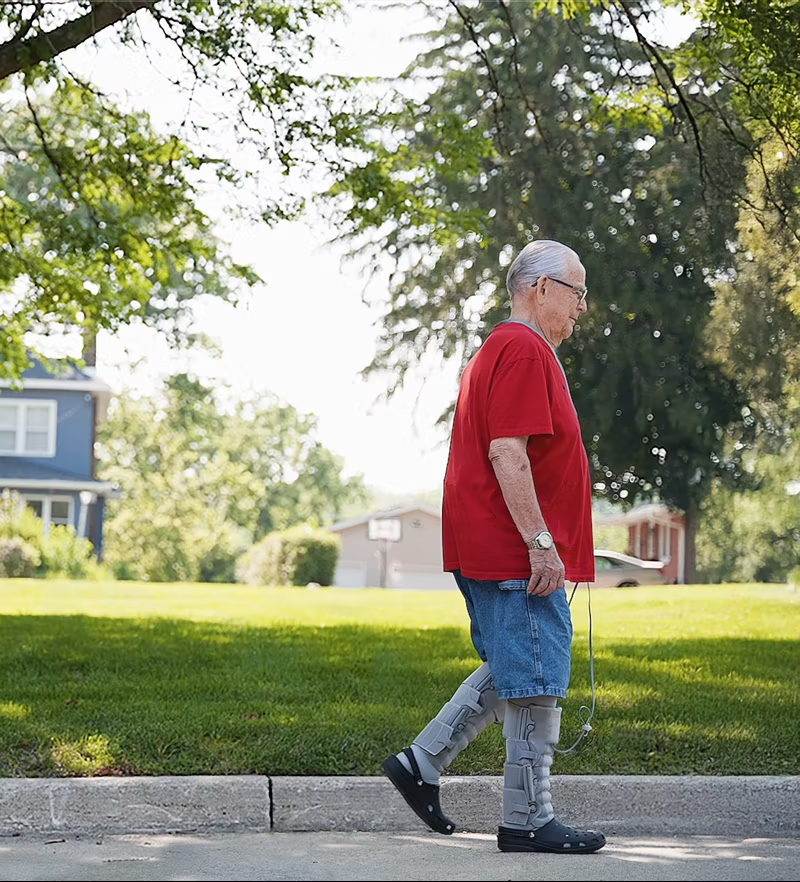
Dayspring Non-pneumatic Compression is the only commercially available compression device that lets you walk, exercise, and go about your daily activities during treatment2. It works with your life – not against it.
Staying active with daily activities like walking, cooking, or cleaning, move your muscles and enhance your body’s ability to further reduce swelling.
Since Dayspring goes where you go, patients stick with it and use it more consistently than air-based compression.
What does the research show?
Dayspring has been evaluated in head-to-head randomized controlled trials, or “RCTs”, comparing it to air-based compression devices. These trials showed better clinical results with Dayspring, including3,4:
- 4x more swelling reduction
- 81–96% usage consistency compared to 50% with air-based devices
- Improved quality of life
Key takeaways:
Research into lymphedema treatments continues to grow, and this new publication adds to the evidence supporting non-pneumatic compression treatment.
- Leading vascular and lymphatic societies endorse the clinical value of non-pneumatic compression
- Dayspring is a non-pneumatic compression device for chronic edema, lymphedema, phlebolymphedema, and related conditions to reduce swelling while supporting mobility during treatment
- Dayspring lets patients walk, exercise, or do their daily activities during treatment
- Clinical studies show better swelling reduction, usage consistency, quality of life, and preference with Dayspring compared to pneumatic, or air-based, compression devices
References:
- Jacobowitz GR, et al. Non-pneumatic compression and its clinical utility in management of lymphedema: A position statement endorsed by the American Venous Forum and the American Venous and Lymphatic Society.” Journal of Vascular Surgery: Venous and Lymphatic Disorders. 2026;14(2):102356. doi:10.1016/j.jvsv.2025.102356.
- For full prescribing information, refer to the Dayspring Directions for Use
- Barfield M, Winokur R, Berland T, et al. Results from a comparative study to evaluate the treatment effectiveness of a nonpneumatic compression device vs an advanced pneumatic compression device for lower extremity lymphedema swelling (TEAYS study). J Vasc Surg Venous Lymphat Disord. 2025;13:101965.
- Rockson SG, Whitworth PW, Cooper A, et al. Safety and effectiveness of a novel nonpneumatic active compression device for treating breast cancer-related lymphedema: a multicenter randomized, crossover trial (NILE). J Vasc Surg Venous Lymphat Disord. 2022;10:1359–1366.

